
Solution Overview
This example explores replacing an existing storefront while preserving the information and workflows the business needs. Platform selection follows a review of the catalogue, integrations and operating constraints.
The Challenge
Questions to resolve before committing to scope:
- Which system is authoritative for stock, pricing and orders?
- Which customer data can be migrated and in what format?
- What is the agreed cutover window and fallback condition?
Delivery approach
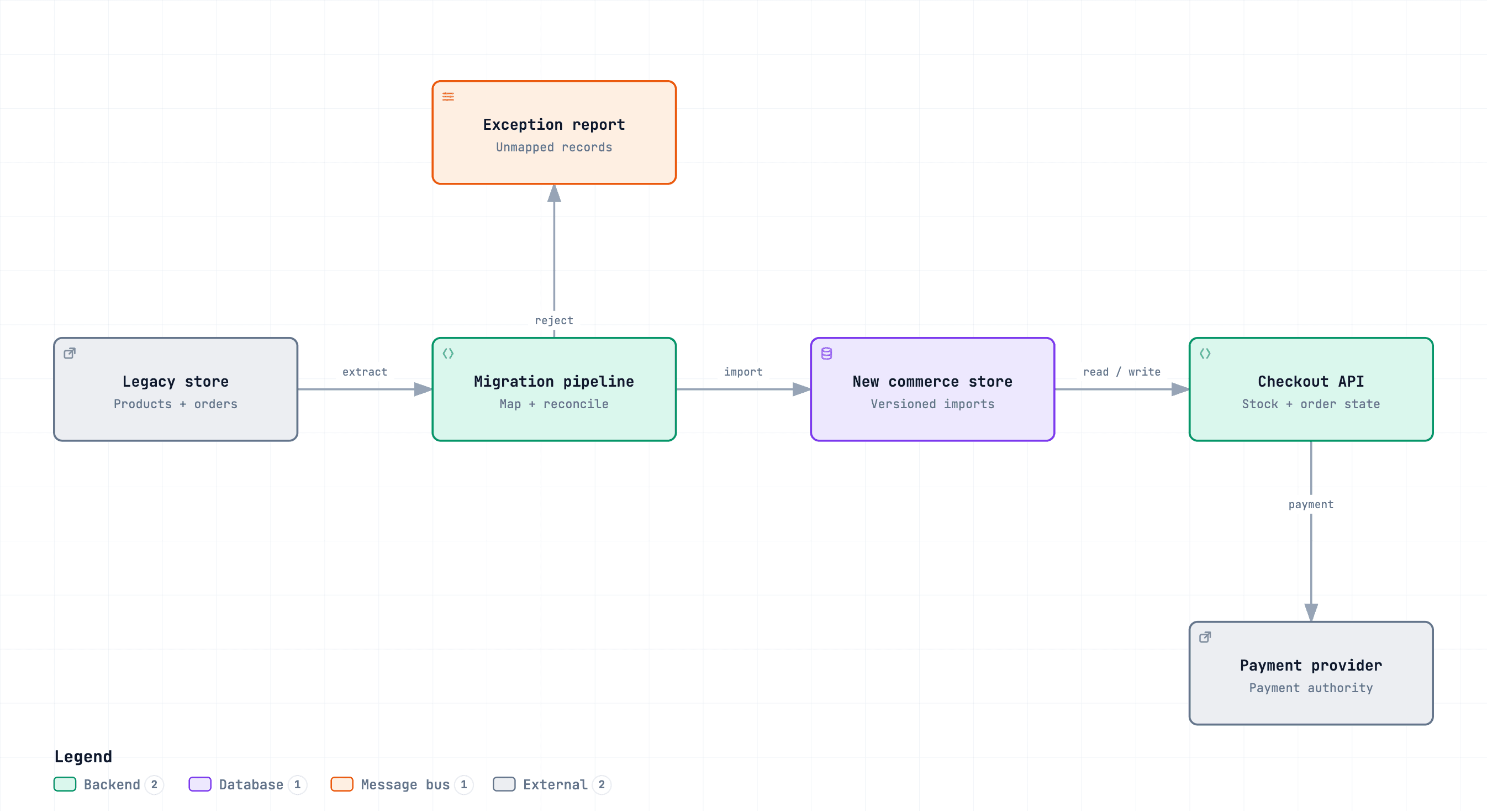
- Audit data and dependencies: Inventory product fields, order states, payment connections and existing page URLs.
- Rehearse migration and checkout: Run trial imports and test checkout, refunds and stock updates using approved test accounts.
- Cut over with a fallback plan: Agree on final synchronisation, redirects, operational checks and rollback triggers.
Inside the solution
From workflow to system design
- Data migration
- Checkout integration
- Release planning
Delivery model
Application development with a rehearsed migration and cutover
Client decisions and discovery
The commerce product owner prioritises journeys. Operations and finance explain fulfilment, refunds and reconciliation. The client authorises the production cutover.
BCT implementation responsibilities
The BA interviews operations and finance using real record samples. The architect maps legacy interfaces. Engineers prepare repeatable migration scripts, while QA checks order totals, payment failures and stock changes.
Review gates and scope boundaries
Hold a migration rehearsal and a go/no-go review. Agree the order freeze, rollback trigger and treatment of orders received during the switch. Payment-provider responsibilities remain explicit.
Key design decision
Rehearse imports before cutover and reconcile identifiers, counts and order totals. Switch traffic only after checkout checks pass; define how new orders will be reconciled if a rollback is required.
Delivery artifacts
Agree these outputs during scoping, then review them alongside the acceptance checks below.
- Migration mappings, repeatable import scripts and reconciliation report
- Checkout tests for payment failure and inventory changes
- Cutover checklist, rollback conditions and post-switch order reconciliation
How to evaluate delivery
- Reconcile record counts and representative order totals.
- Complete end-to-end purchase and refund tests.
- Compare performance against a recorded baseline under agreed test conditions.